
Gemata brings manuals and machine data to the line with Statwolf’s AI
Maestro and Regia: two artificial intelligence assistants that put manuals and machine data in the hands of the people working on Gemata finishing lines, for less downtime and faster interventions.
What they say about the project
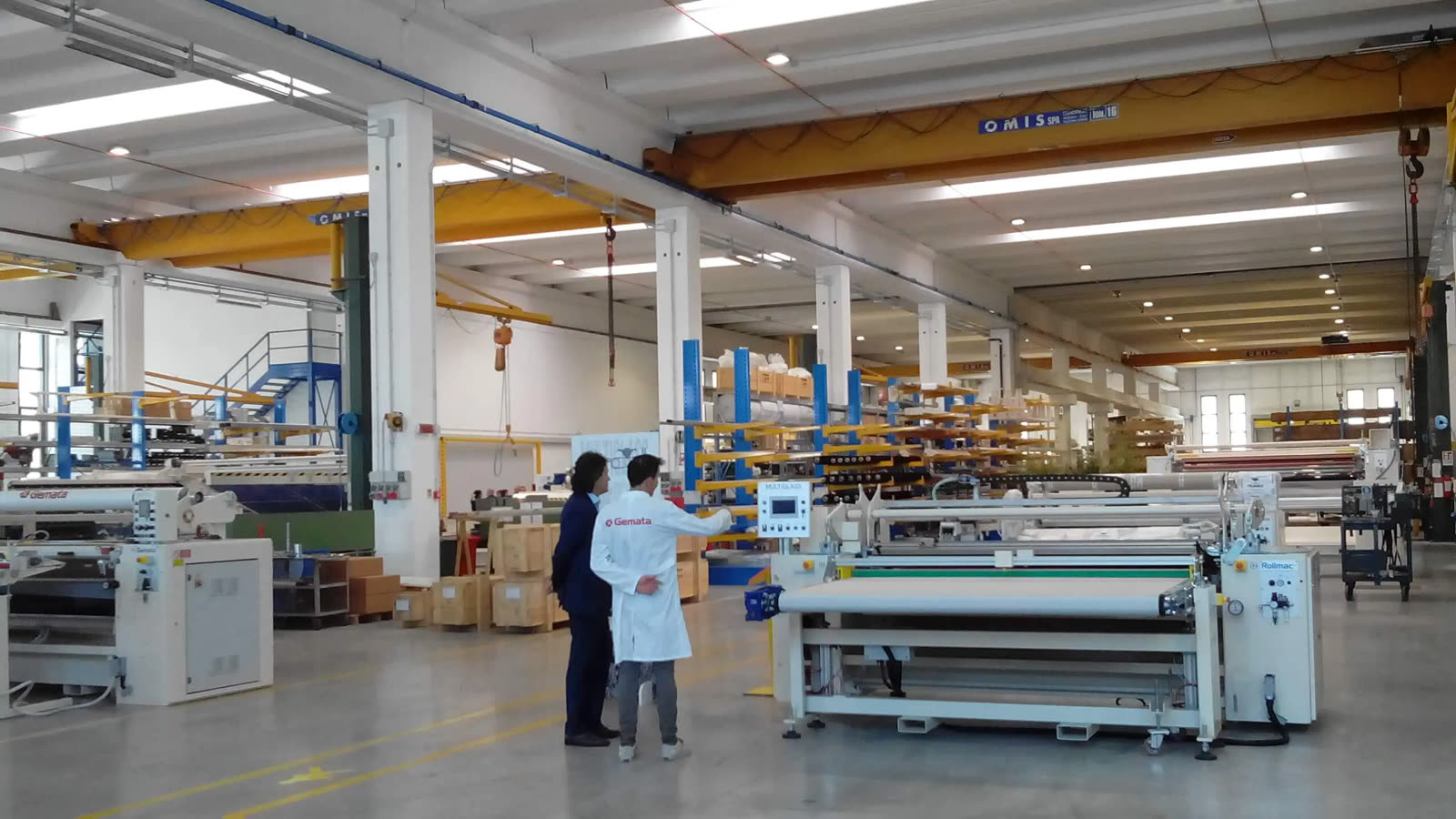
“A machine is sold once, but service lasts for its whole life. A tannery customer judges a line by the hides it finishes, and every hour of downtime weighs on the machine’s name. With Statwolf we are turning our know-how into a digital service that keeps us present every day alongside our customers, in the language of the people working on the line.”

“When a line stops, leafing through a manual is not the fastest way to find the answer. With Maestro the operator asks in their own words and receives the procedure with the original page highlighted, so every step can be verified. With Regia sensor data becomes OEE and dashboards without waiting for a report. And we started from what we already had: manuals, service history and machine data.”
Machines at work all over the world, knowledge scattered
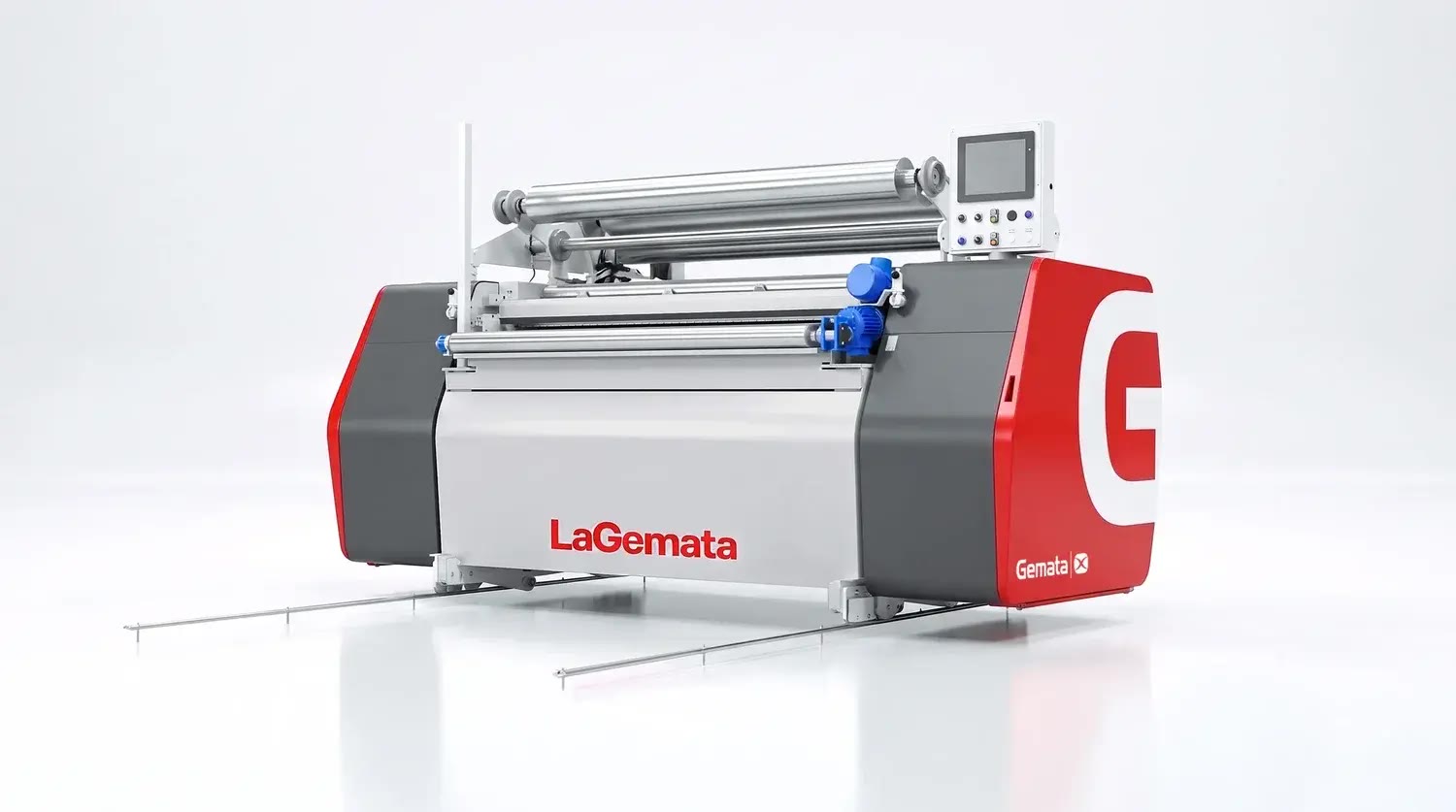
Gemata World is a global reference in surface finishing technologies: leather, glass, technical textiles, wood and composites. The Group brings together synergistic companies, including GEMATA, Todesco, COS.T.A., Rollmac and Gemata do Brasil, and is based in Trissino (Vicenza). For the tanning industry Gemata is a 360° finishing partner; Todesco, based in Creazzo (Vicenza) and founded in 1971, designs spraying lines and systems for leather finishing.
The Group’s machines work in tanneries all over the world, where productivity is what counts: every hour of downtime weighs on the machine’s name. At the same time experienced operators are hard to find, teams speak many languages and the know-how sits in the heads of a few. For Gemata, moreover, service is a relationship: the machine is sold once, service lasts for its whole life, and digital services make it possible to be present every day.
In this context Gemata started a project with Statwolf to make the most of what already exists (manuals, service history, sensor data) by making it accessible to the people working on the line and to those running the plant.
The answer exists, but not where the operator is
When a line stops, the answer usually exists. It is just not where the operator is: so the operator calls service, the manager waits for a report, and the machine waits for both.
The goal was not to add another tool, but to build a service able to:
- give operators and maintenance technicians, at the machine, the knowledge contained in manuals and service cases;
- answer in the user’s language, pointing to the reference page;
- give owners and production managers a reliable view of how the line is doing, without waiting for a report;
- ground every answer in Gemata sources, verifiably: no source, no answer;
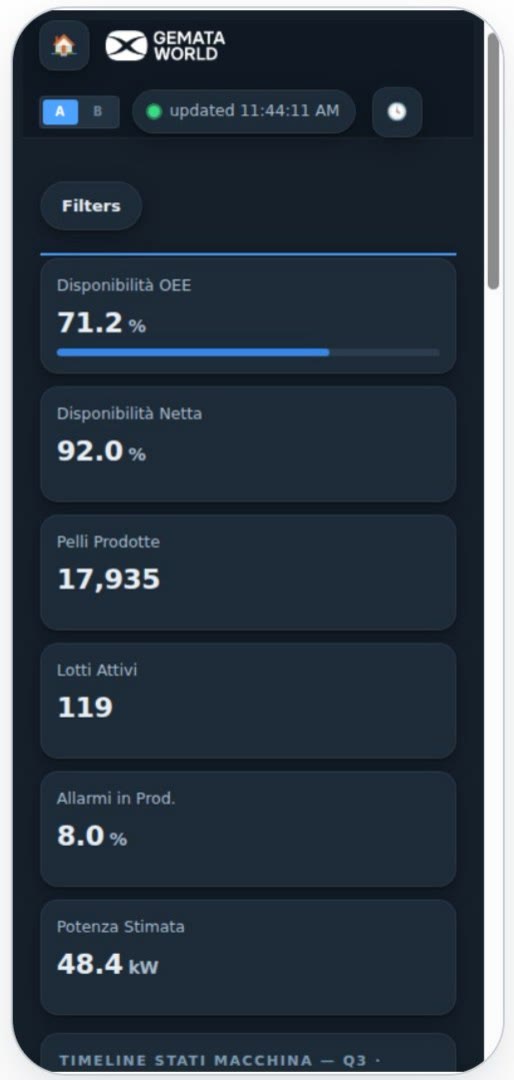
- work from phone and tablet, in the browser, with the Gemata name, colours and logo.
Two products: one for knowledge, one for data
Maestro: manuals that answer
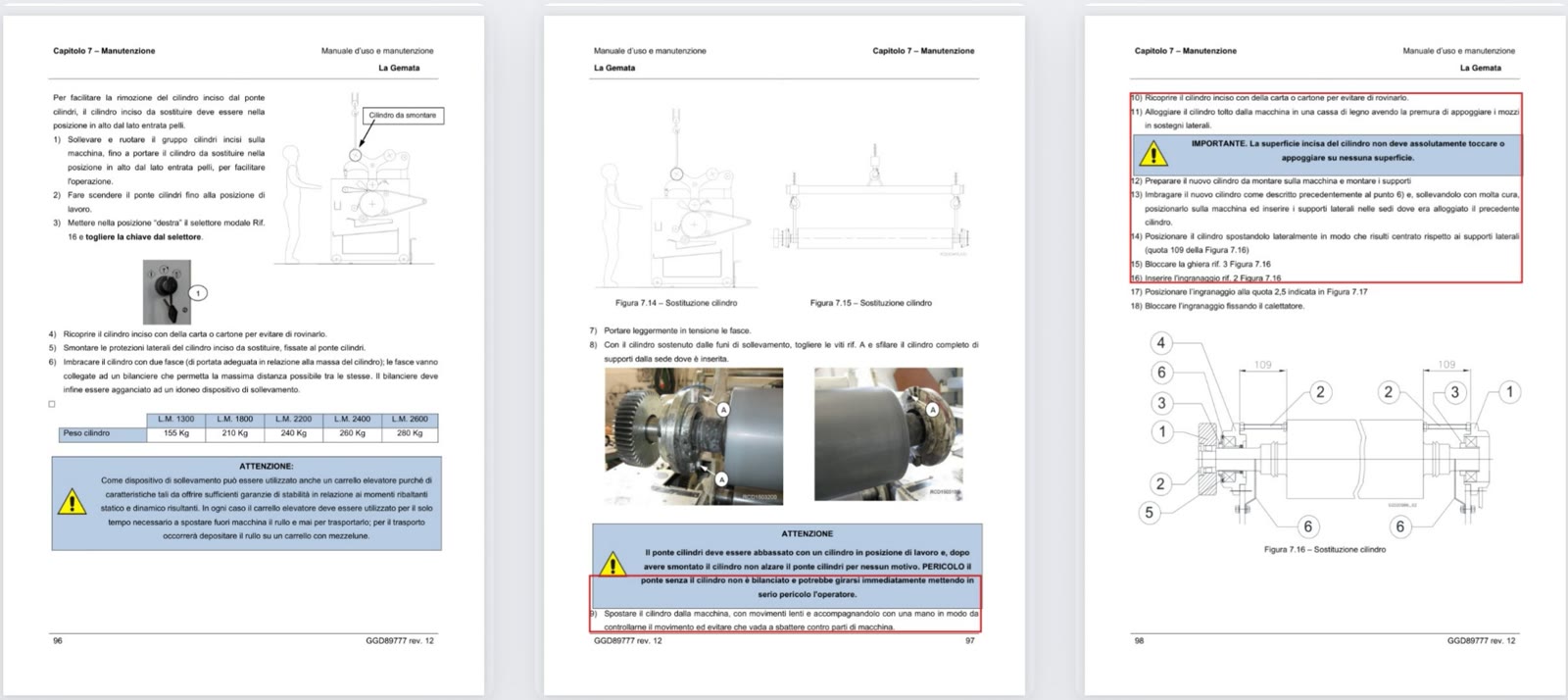
For operators, maintenance technicians and service. Maestro answers questions about Gemata machines starting from manuals and service cases, in the user’s language. The operator asks in their own words, for example “How do you replace the engraved cylinder?”, and receives the step-by-step procedure, with the safety warnings. Every line of the answer has its citation: one click opens the original manual page with the exact paragraph highlighted; figures, dimensions and tables stay where they are and the full PDF of the chapter is one click away.
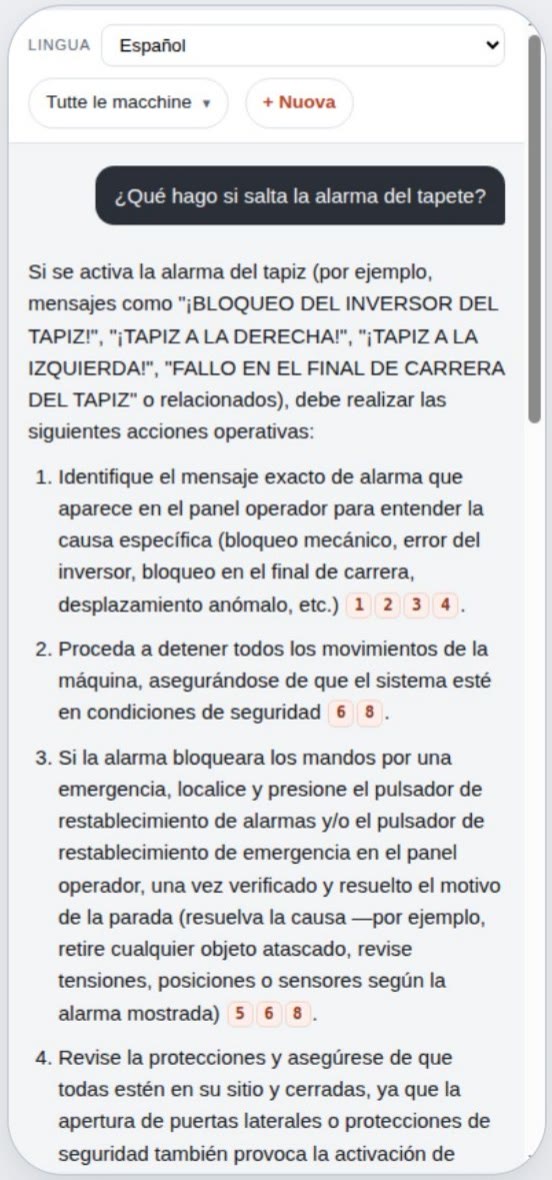
A QR code applied to the machine brings Maestro to the phone: you ask by voice, in your own language, and work with the procedure and the manual page in hand.
Maestro works on the entire Gemata and Todesco product catalogue.
Regia: the plant in a conversation
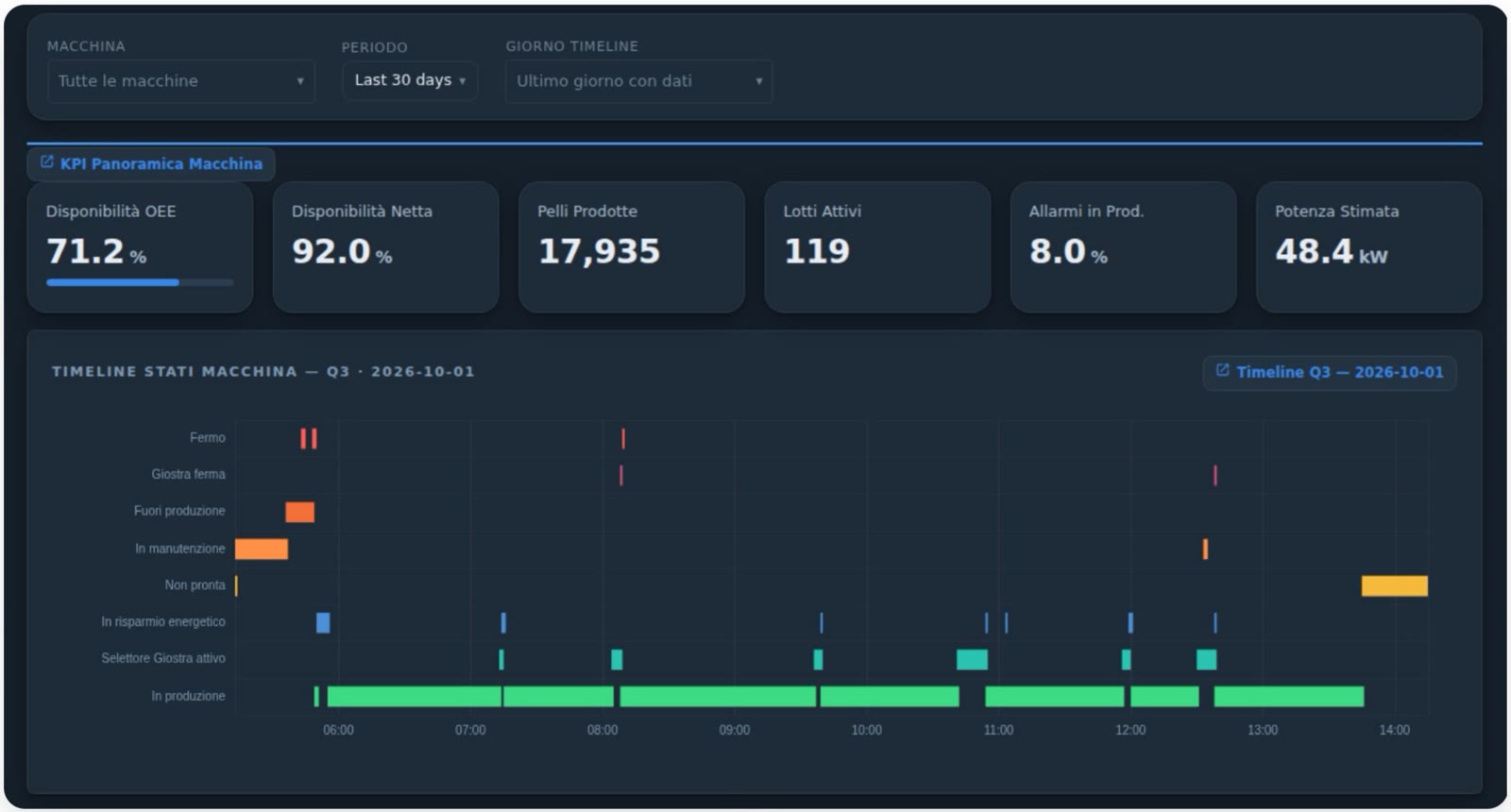
For owners, production managers and Gemata service. Regia answers questions about how the line is doing starting from real-time sensor data, and builds dashboards and reports to follow it. It measures performance with OEE, the product of availability, performance and quality: machine states minute by minute, stops and micro-stops, alarms by severity and by shift, hides per shift and per batch, carousel and belt speed, oven temperature by zone, filter efficiency, thickness asymmetry on the roller.
Dashboards are born from a conversation, in Gemata colours, and every panel opens the query that generated it: every number is verifiable. An email alert every morning flags the situations that need attention, only when needed.
Maestro and Regia together
The two products are connected: when Regia sees an alarm, Maestro brings the procedure to solve it.
How it works
Gemata sources
Manuals, drawings, brochures, service cases and machine sensors, with one reading per second. Nothing to rewrite: the system works on what already exists.
Search index
An index that remembers every page and every paragraph, and makes it possible to cite the original page with the passage highlighted.
Statwolf engine on machine data
It queries live machine data, computes OEE and indicators, builds dashboards and reports.
AI model chosen by the client
Anthropic, OpenAI, Google or the client’s own model, including one installed locally; instructed to answer only from these sources. With a smaller local model the answers are simpler, but they remain grounded in the sources and with the page cited.
Confidentiality
A dedicated installation per client; every conversation in an isolated space.
What changes in the tannery and for Gemata
| The situation | Today | With Maestro and Regia |
|---|---|---|
| An engraved cylinder must be replaced | Look for the manual and the right page, or call Gemata | Ask from the phone: the steps, the warnings and the page |
| An alarm stops the line | Wait for service to call back | Solve first-level alarms on the spot, safely |
| A new operator arrives | Weeks of shadowing; manuals only in Italian | Answers in their language from day one |
| How did last night go? | Wait for someone to pull a report | Ask, and get the answer with reliable numbers |
| Why did the OEE of booth Q1 drop? | Guesses, or days of an analyst’s work | Stops, pace and quality parameters by shift, in a conversation |
| Is something going wrong? | A monthly report, read too late | An alert every morning by email, only when needed |
For Gemata: fewer repetitive calls, service know-how reused, manuals that become a daily service under the Gemata name; visibility on machines in the field, service before the customer calls, real data to design the next machine.
The system’s screens
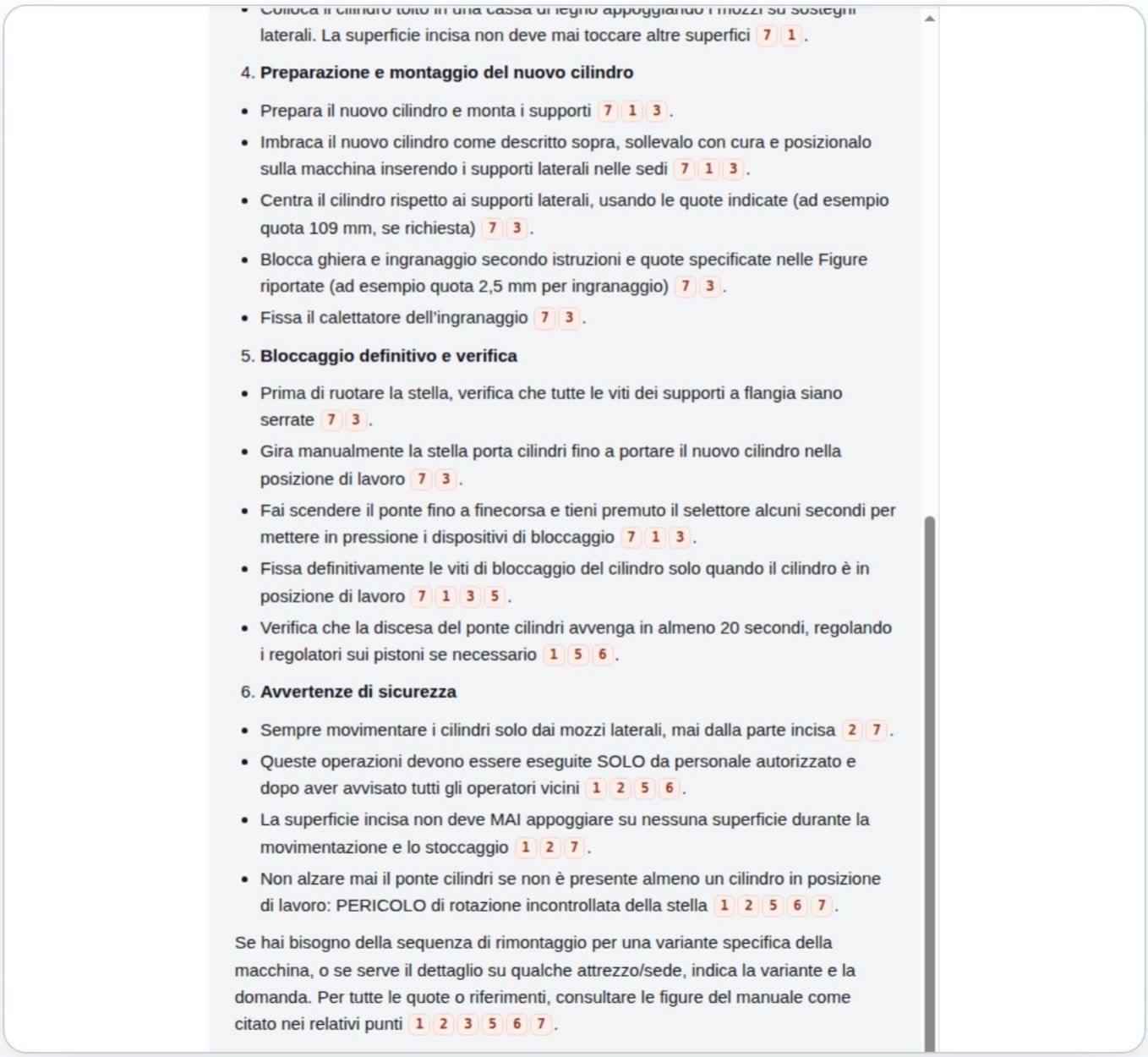
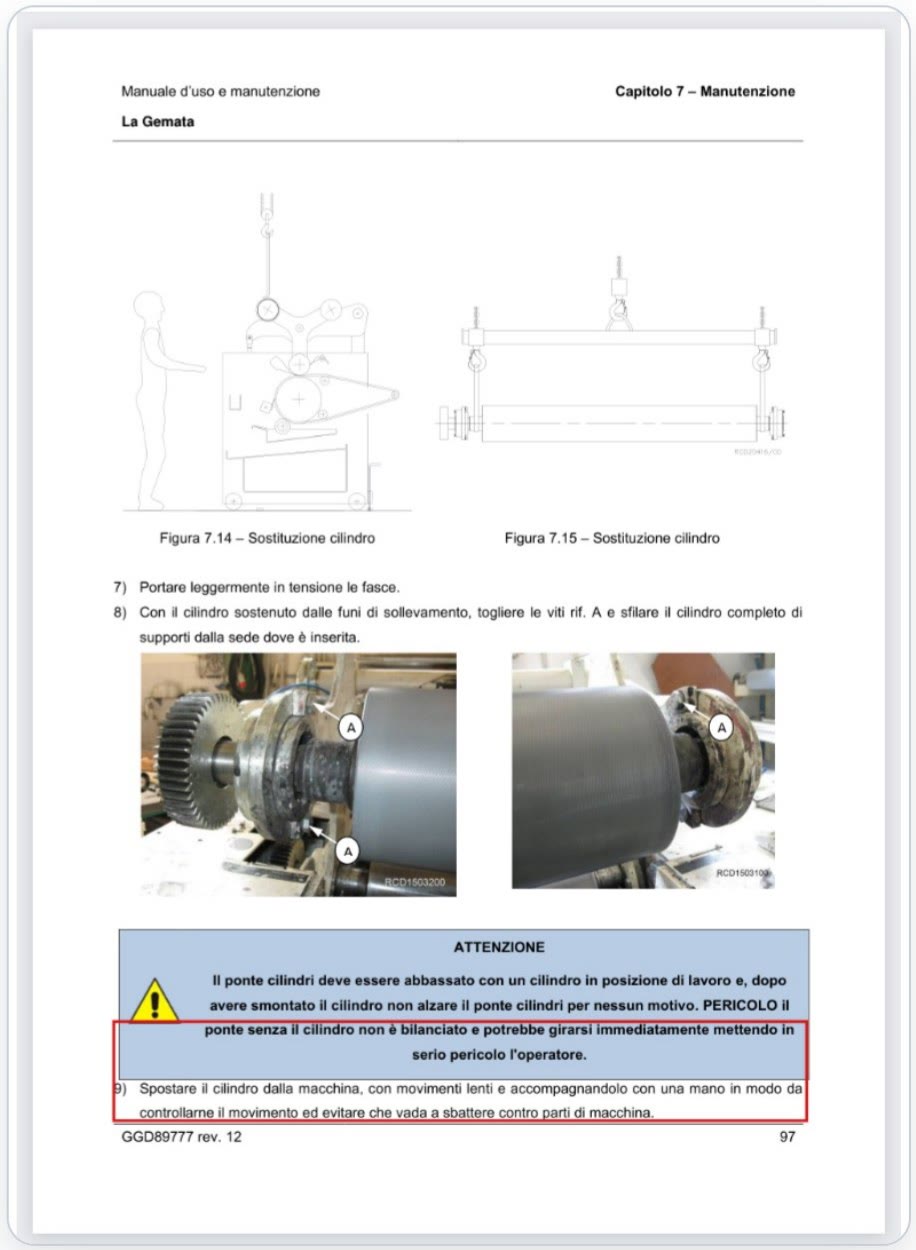
Real system, gemata.statwolf.com, 2 October 2026.
From the algorithm to the service Gemata’s customers use
The Gemata case reflects Statwolf’s mission well: not just developing algorithms, but the ability to bring industrial AI into production, on existing sources and systems, with answers that can be verified by those who use them. In the Gemata case this translates into a solution that combines:
- answers grounded only in the client’s documents and data: no source, no answer;
- verifiability: every statement opens its manual page, every number its query;
- use of what is already there: existing manuals, service cases and sensors, nothing to rewrite;
- freedom to choose the AI model, including local ones, with no lock-in;
- a dedicated installation per client and conversations in isolated spaces;
- Gemata brand: for the tannery customer it is a Gemata service.
The project is not a chatbot added to the machine: it is a way to make every Gemata machine more useful even after the sale. Maestro brings the operator the procedure and the page that proves it, in their language; Regia brings those running the plant the numbers of the line and an alert when needed. Together, for the tannery they mean less downtime and faster, safer interventions; for Gemata, a lasting service relationship on every line sold.